The Town of Jetpur
In January 1915, Jetpur welcomed Gandhi after his return to India. The town’s ceremonial address forms the centre of this archive.
A historical archive
Explore the documents, records and family archive surrounding an early documented use of the title “Mahatma” for Gandhi.
Story
In January 1915, Jetpur welcomed Gandhi after his return to India. The town’s ceremonial address forms the centre of this archive.
The Gujarati document records the community’s welcome and is central to the discussion about an early public use of “Mahatma.”
The title’s earliest use is debated. This exhibit presents its evidence carefully and distinguishes family record from wider scholarship.
The question
A surviving felicitation address sits at the centre of one family’s effort to correct the historical record.
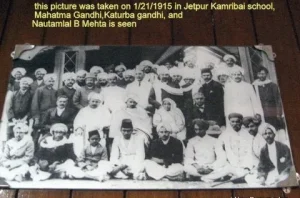
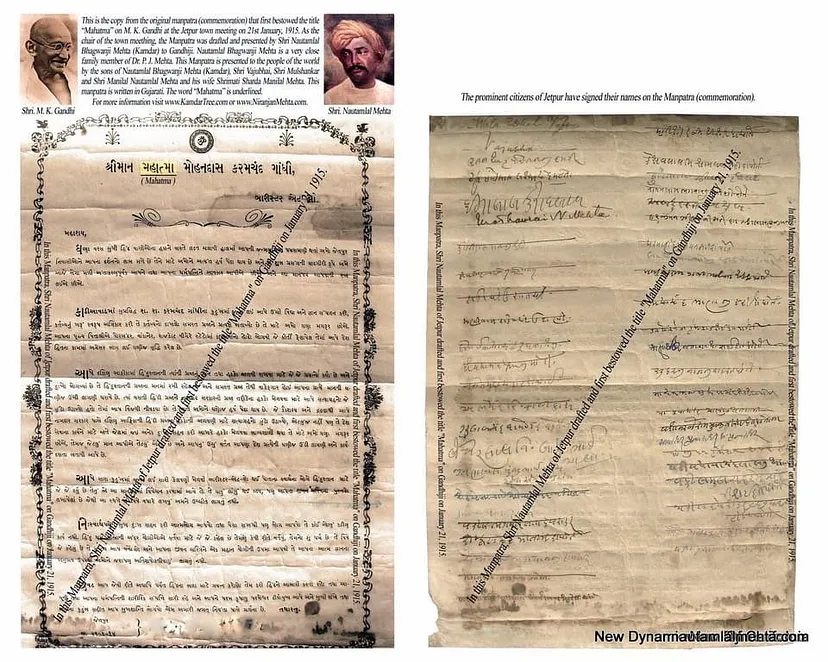
The Mehta family archive attributes the document to Nautamlal Bhagawanji Mehta, Nagarsheth of Jetpur, and dates its presentation to Gandhi at Kamribai School on 21 January 1915.
A historical moment
According to the archive, Gandhi arrived at Kamribai School, where Nautamlal Bhagawanji Mehta presented the Manpatra before assembled citizens.
Archive room 02
Documents that form the record presented by the Mehta family archive.
The original document
21 January 1915
Jetpur, Saurashtra
The archive identifies this as the Manpatra drafted by Nautamlal Bhagawanji Mehta and presented to Gandhi. The surviving copy shows the address and citizens’ signatures together.
Historical note: this description reflects the provenance and interpretation given by the source archive.
Chronology
Documented material, family testimony and competing interpretations are kept visibly distinct.
The source site notes a reported letter from Pranjivan Mehta to Gopal Krishna Gokhale using ‘Great Mahatma’. It disputes the relevance of a private written reference to its ceremonial claim.
The family archive identifies this as the day Nautamlal Bhagawanji Mehta presented a signed felicitation address to Gandhi at Kamribai School, Jetpur.
The source records a later January claim associated with Gondal Rajshala and places it after the Jetpur document.
The archive discusses later attributions involving Rabindranath Tagore and Gurukul Kangri. These remain part of a wider historical debate.
The site describes family correspondence with publishers from the 1950s and Niranjan’s effort, beginning in 1996, to bring the documents to wider attention.
Custodians of memory
Nagarsheth of Jetpur, civic leader, and the figure whom this archive identifies as the author of the 1915 Manpatra.
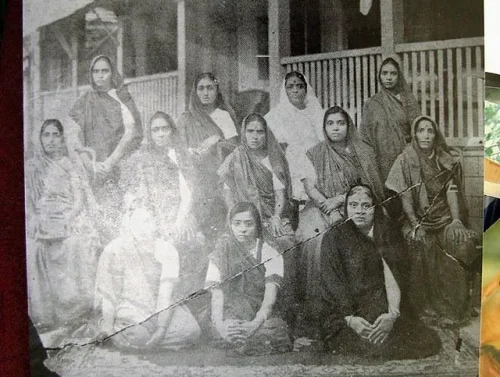
The documents survived through his sons Manilal and Moolshankar and later family members, who sought recognition for the Jetpur record from the 1950s onward.
A personal note
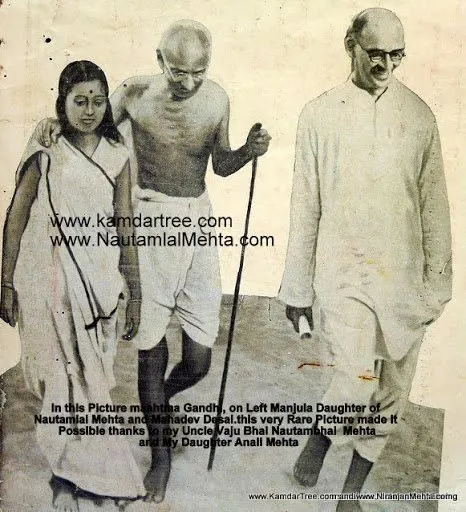
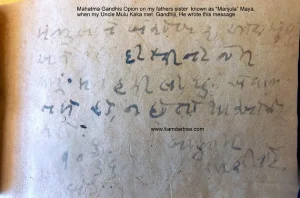
The archive attributes this Gujarati note to Gandhi, written to Moolshankar about his sister Manjula. Its interpretation was supplied by Gandhian scholar Dr Varsha Das.
“She won my heart as my daughter. If you are like her, remain so; if not, try to be like her and stay that way.”English rendering reproduced from MahatmaGandhi.us · “Baapu’s blessings”
Explore the archive
Photographs, documents and family records, preserved without alteration.
13 records
Research index
This page preserves the source archive’s evidence while distinguishing original material from family recollection and interpretation.
Visit the source websiteJetpur Manpatra, Kasturba Gandhi Manpatra, handwritten Gandhi and Kasturba notes.
National Gandhi Museum, Rajghat, New Delhi, correspondence attributed to Dr Y. Anand and Dr Varsha Das.
Collected Works of Mahatma Gandhi, Volume 14, page 347, as cited by the source site, Louis Fischer’s account.
Manilal and Moolshankar Mehta family notes, publishing correspondence beginning in the 1950s.
Photographs and documents held and reproduced by the Mehta family / New Dynamic Inc. trust.
The archive remains open
Explore the documents, records and historical archive.
View the archive